How do strings of thread and weaving relate to being digital? Surprisingly, these two things have a lot more in common than you would expect.
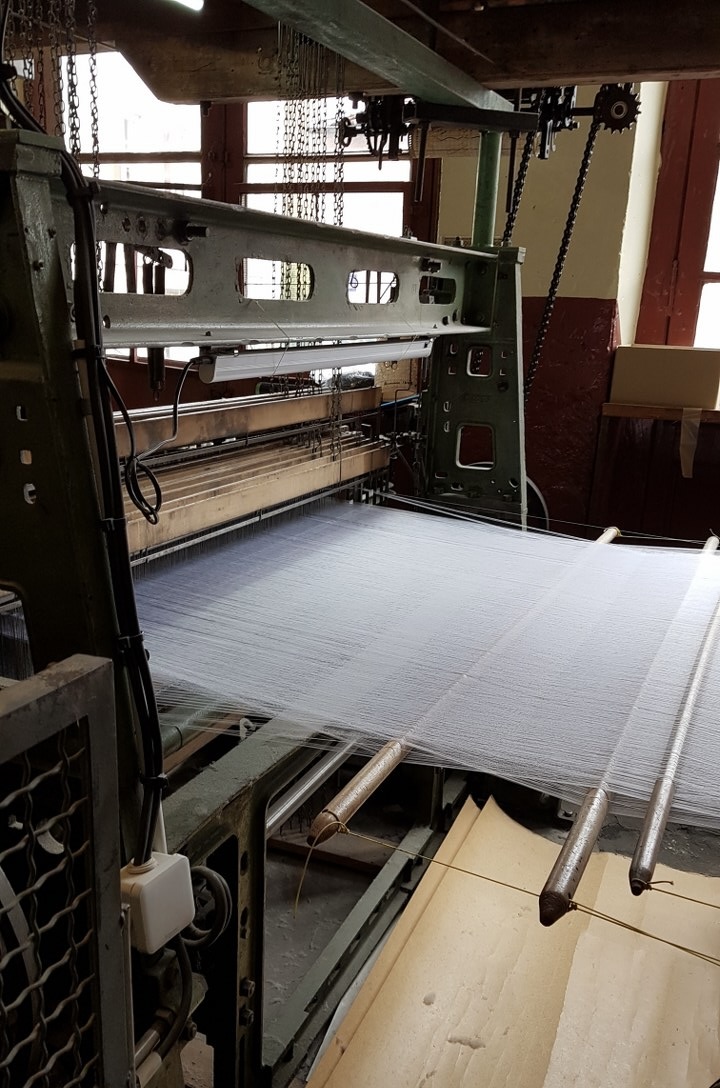
The city of Lyon, located in France, had a lot of money at the end of 18th century. The city was known for the greatest silk weaving in the world. ⅓ of the people in who lived here worked in the industry. There were 14,000 looms, and each loom needed 2 people. The weaving process was quite slow and incredibly labor intensive: with 2 people, in 1 day, they only completed 1 inch of fabric.
Weaving looms had pedals to lift the strings, creating a series of ups and downs. Whenever a new pattern was created, the loom would need to be setup differently with different pedals. At the time, this was the most complex device made by a human. Through this creative process, people kept building off each other and inventing new technologies. Eventually a device would be introduced that would change the weaving industry forever.
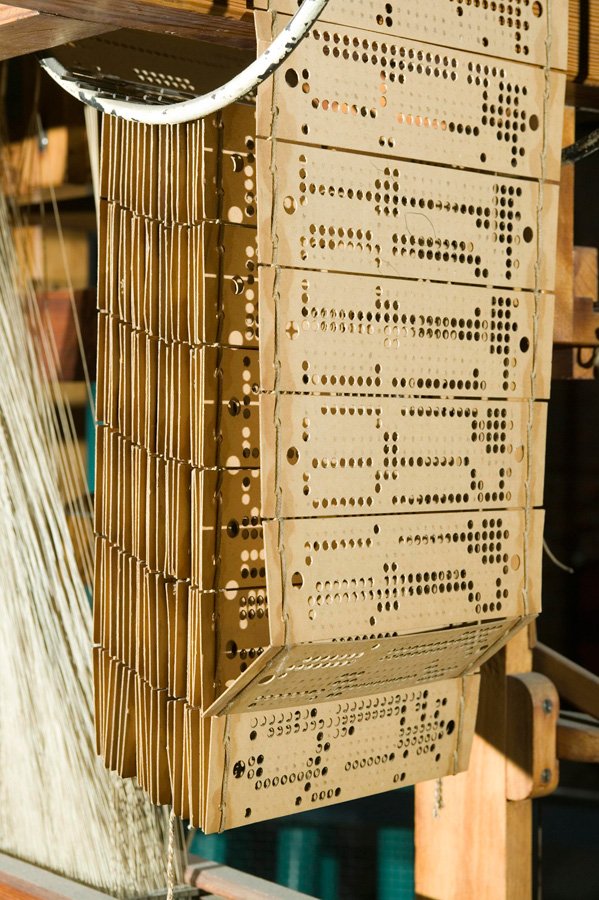
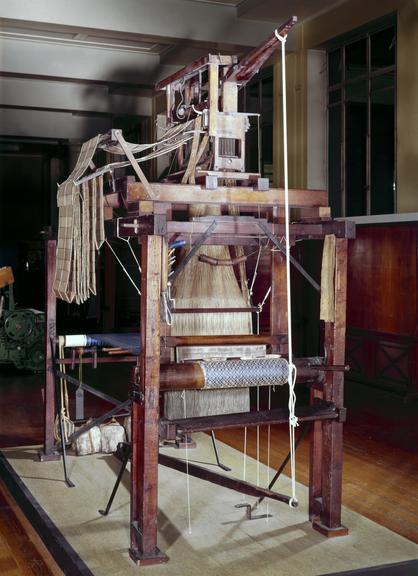
The Jacquard Loom was groundbreaking technology invented by Joseph-Marie Jacquard. The machine sped up weaving as it used punch cards. These punch cards had holes to control the hooks of the loom, and the holes could be recognized as the first system of 1s and 0s in the digital world. A hole in the card would lift up the harness of work threads, while no hole would leave them down. The punch cards were a form of “programming” for the loom, and each card produced different patterns. Complicated patterns were made by punch cards, which allowed for a new occupation in the city.
Weaving went from being a tedious craft to just simply pressing a petal. Information was transferred from a picture, to a punch card, to finished fabric. This invention was revolutionary, as it could produce 30 feet instread of 1 inch in one day. While this invention made weaving a lot easier, it took jobs away from thousands of people.
The loom revealed the power of abstracting information, but only one dimension of the information was taken. There was no information on the punch cards about color or what material to use. New advancements are beneficial to humans as we find ways for our world to be more digital and automated. However, is it worth the number of occupations being lost in the process?
The city of Lyon had visionaries behind being digital. Often, history is taught so it is not repeated. Sadly, it is still repeated most of the time. People in Lyon suffered after losing their jobs with the invention of the loom. Humanity is continuously making this mistake today, as we are replacing humans with robotic minds.